

Which Emergency Wall Phone Still Works in a Power Cut?
Last Updated: November 15, 2026
Quick Summary
The best emergency wall phone for a power outage is a line-powered analog model, since it draws operating current from the phone line rather than household electricity. Cordless phones generally fail during outages, but a corded wall phone on an analog line can keep working. Still, verify your line type with your provider because service depends on the jack and provider.
- Cordless phones rely on electric power and generally will not work during an outage.
- A line-powered phone draws operating current from the phone line, not a wall outlet.
- Choose the analog version of a model; the IP version depends on network power.
- Fiber, cable and VoIP lines need backup power on their network equipment to stay working.
- Test the phone once a quarter by making a test call to the programmed number.
Table of Contents
- Why a Corded Wall Phone Can Keep Working When the Power Fails
- Landline Phones That Don't Need Electricity: How Line Power Works
- Comparing HQ Telecom Emergency Wall Phones Side by Side
- Backup Power for Landline Phone Setups: What Actually Helps
- Choosing an Emergency Wall Phone for Seniors and Accessibility
- Installation, Mounting and Testing Your Line Before an Outage
- Booking Your Emergency Wall Phone Before the Next Outage
- Frequently Asked Questions
Why a Corded Wall Phone Can Keep Working When the Power Fails
A wall phone in an office, hallway or lobby is only useful if it still works when the lights go out. That is the real test for an emergency wall phone. Many people assume any telephone will work during a blackout, but that is not always true.
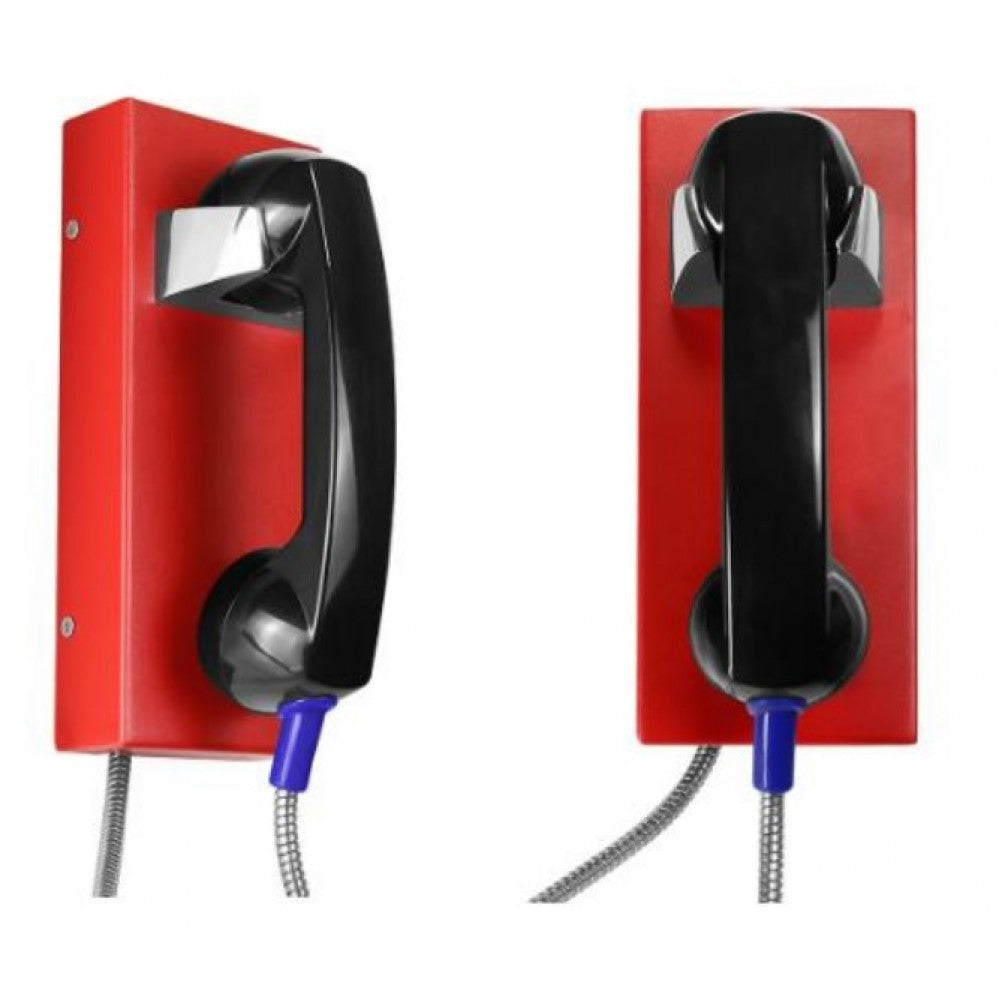
Cordless phones rely on electric power and generally will not work during an outage. The Federal Communications Commission (FCC) says traditional telephone service may work during outages, though a corded phone may be needed.
Note that the FCC does not promise that a corded phone always works. Service depends on your provider and your line. Treat a corded wall phone as the most dependable option you can install, not a guarantee.
Landline Phones That Don't Need Electricity: How Line Power Works
A line-powered phone draws its operating current from the telephone line itself, not from a wall outlet. As long as the line delivers power, the phone can ring, dial, and carry a call. That is why the phrase "landline phones that don't need electricity" is a useful search term, although the accurate description is "phones that don't need household electricity."
The distinction matters because a corded handset is just the physical part you hold, while a line-powered service is what keeps the phone running. A phone can have a cord and still depend on household power, so check the power source before you buy.
Corded handset versus line-powered service
When shopping, look for three things:
- Corded handset: the handset connects to the base by a coiled cord, so no batteries are involved.
- Line-powered design: the unit uses an RJ11 plug and patch cable to draw power from the phone line.
- Analog compatibility: the phone works with standard analog landlines (POTS).
HQ Telecom's Waterproof Plastic Boxed Wall-Phone and Explosion, Weather and Vandal Proof Aluminum Alloy Heavy Duty Boxed Wall-Phone are both listed as phone line powered with RJ11 plug and patch cable included.
Compatibility checklist by line type
A corded phone may not need local power, but the service or network equipment behind the jack may. Use this checklist to confirm what you actually have before relying on a wall phone during an outage.
- Analog copper line (POTS). The traditional line is powered from the central office and is the most outage-resilient option. Verify with your provider that the jack is still an active analog line and not a digital adapter behind the scenes.
- Fiber service. Fiber itself does not carry power to the phone. The provider's optical network terminal (ONT) and any battery backup unit must have power for phone service to continue. Ask the provider how long the ONT battery lasts and whether voice is provisioned on the ONT.
- Cable service. Cable phone service runs through the cable modem, which needs household power. Without a UPS on the modem, the phone goes down with the power. Confirm whether the provider supplies a backup battery for the modem.
- VoIP and internet-based phones. These depend on broadband, the router, and often an analog telephone adapter (ATA). If any of those lose power, the phone stops working. A UPS can extend runtime, but check the load and battery rating rather than assuming a fixed number of hours.
- Cellular home-phone service. A cellular home-phone base station needs power and a cellular signal. It can survive a wireline outage but fails if the local cell site loses power or the base station battery runs out. Confirm the base station has a battery and test it.
Watch out: the most common and consequential mistake is assuming a corded phone guarantees service. The handset may be line-powered while the service behind it is not. Verify the line type at the jack with your provider before an outage, not during one.
Where VoIP and internet-based phones fit in
Internet-based phones depend on your broadband connection and router. If the power goes out, the modem and router often go down too. VoIP phones are therefore less dependable during an outage unless you add backup power to the network equipment.
HQ Telecom's Vandal-Resistant Wall-mount Phone is available in an analog version and an IP VoIP version. The IP model needs a SIP server and Power over Ethernet, so it depends on network power. For outage resilience, the analog model is the simpler choice.
Comparing HQ Telecom Emergency Wall Phones Side by Side
Most outage-phone articles stop at "buy a corded phone." The harder question is which wall-mounted model fits a specific site, line type, and failure scenario. The table below compares the HQ Telecom range on the factors that actually decide whether a phone works when the power, broadband, or cellular network fails.
| Model | Price | Line Powered | Dialing | Enclosure / Rating | Best For |
|---|---|---|---|---|---|
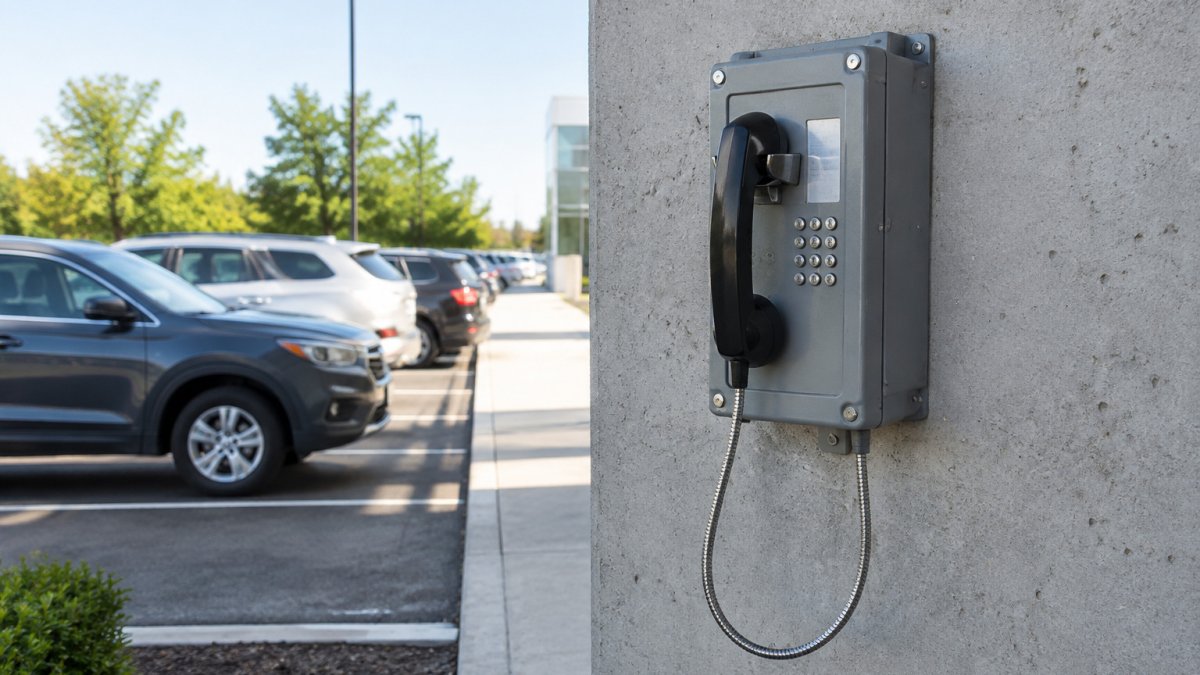
| Auto Dial Emergency Wall Phone (Vandal and Weather Proof) | $339.99 | Yes | Auto dial, no keypad | Vandal and weather proof | Parking lots, platforms, hospitals |
| Industrial Wall Mounted 4-Speed-Dial Emergency Telephone | $349.99 | Yes | Four speed-dial buttons | Powder-coated cold-rolled steel, IP54 | Airports, schools, public spaces |
| Vandal-Resistant Wall-mount Phone | $249.99 | Analog model yes; IP model no | Automatic hotline dialing | IP54 | Schools, offices, elevators |
| Explosion, Weather and Vandal Proof Aluminum Alloy Heavy Duty Boxed Wall-Phone | $499.99 | Yes | Three speed-dial buttons | Aluminum case, IP66-67 | Harsh industrial and marine sites |
| Waterproof Plastic Boxed Wall-Phone | $399.99 | Yes | Analog | Plastic housing, IP65-66 | Outdoor and wet areas |
How to read the comparison
Start with the line type, not the price. Every model above is line-powered in its analog form, which means it draws operating current from the phone line rather than a wall outlet. The Vandal-Resistant Wall-mount Phone is the exception to watch: its IP VoIP version is powered via Power over Ethernet and depends on network power. For outage resilience, choose the analog version.
Next, match the dialing method to the user and the site. The Auto Dial model has no keypad; lifting the handset triggers a pre-programmed number. That is the right choice for a single emergency line where the user should not have to remember or dial anything. The 4-Speed-Dial and 3-Speed-Dial models suit sites that need more than one fixed contact, such as 911 plus an internal desk or a taxi service.
Then match the enclosure to the environment. IP54 covers dust and splashing water and fits indoor public spaces. IP65-66 handles hose-directed water and outdoor exposure. IP66-67 with an aluminum case is built for industrial and marine conditions where corrosion and impact are real risks.
Trade-offs the spec sheet does not show
- Auto dial vs. keypad flexibility. An auto-dial phone is faster in an emergency but cannot be repurposed for general calls. A speed-dial model is more flexible but depends on the user pressing the correct button.
- Analog vs. IP within the same model. The Vandal-Resistant Wall-mount Phone shows why the distinction matters: the analog version survives a household power cut, while the IP version does not unless the network gear has backup power.
- Enclosure cost vs. environment. The Explosion, Weather and Vandal Proof model is the most expensive because of its aluminum case and IP66-67 rating.
Watch out: a phone listed as "line powered" still depends on the line delivering power. Confirm with your provider that the line is analog copper or otherwise line-powered at the jack before assuming any model above will work during an outage.
Plan ahead if you need a phone before a known outage season.
Backup Power for Landline Phone Setups: What Actually Helps
A line-powered phone does not need household power, but many other parts of a communication setup do. If you rely on a router, an IP phone system or a cordless base, you need a plan for those devices.
Practical steps include:
- Keep the analog line separate. Run your emergency wall phone on a traditional analog line rather than sharing it with an internet router.
- Identify what needs power. List every device on the emergency path: router, modem, ATA adapter, base station.
- Plan a backup source for network gear. An uninterruptible power supply (UPS) can keep a router and modem running for a period of time. Its runtime depends on the load and battery size, so check the rating before buying.
- Test the setup. Unplug the mains supply briefly during a planned test to confirm the emergency phone still rings and dials.
Battery backup does not help a cordless phone base unless the base has its own battery. Confirm this before assuming a cordless system will survive an outage.
Choosing an Emergency Wall Phone for Seniors and Accessibility
For older adults or people with limited mobility, the phone should be simple to use. An auto-dial model that connects the moment the handset is lifted removes the need to remember a number. Speed-dial buttons with clearly labeled services can also help.
HQ Telecom's Explosion, Weather and Vandal Proof Aluminum Alloy Heavy Duty Boxed Wall-Phone lists a hearing-aid-compatible receiver and a stainless steel illuminated keypad. The Waterproof Plastic Boxed Wall-Phone also lists a hearing-aid-compatible receiver.
Mounting height matters too. Install the handset at a height the user can reach from a seated or standing position, and make sure the coiled cord can reach the user's hand.
Installation, Mounting and Testing Your Line Before an Outage
Installation is usually straightforward for a wall-mount enclosure. Choose a location with a working analog phone line and a nearby RJ11 jack. Mount the base at a reachable height, connect the patch cable, and test a call before you leave the site.
Before any outage, test the phone:
- Lift the handset and check for a dial tone or automatic dial.
- Make a test call to the programmed number.
- Confirm that incoming calls ring audibly.
- Note the phone's programmed numbers and keep a copy with your emergency plan.
Some models allow programming after delivery, but changing numbers may need a special keypad. Factory pre-programming is available on request for the Auto Dial model.
Booking Your Emergency Wall Phone Before the Next Outage
A wall phone is most useful when it is installed before you need it. Choose the model that fits your location, power setup and users, confirm that your line is analog, and test the phone once a quarter. If you are ready to buy, browse the full HQ Telecom range and pick the model that matches your site.
Frequently Asked Questions
What landline phone works during a power outage?
A traditional corded landline that is powered by the phone line itself, rather than by household mains, is the option most likely to keep working in a power cut. The FCC says traditional telephone service may work during outages, though a corded phone may still be needed. Models such as the HQ-J304 and HQ-J205 are line-powered via an RJ11 connection, which is why they suit this use. Service still depends on your provider keeping the line active, so test the phone periodically.
Can you use a landline phone when the power goes out?
Often yes, if the phone is corded and powered by the telephone line. Cordless handsets need mains electricity for their base station and will stop working when the power fails. A corded line-powered wall phone draws its operating power from the phone line, so it does not depend on your home supply. Whether the line itself stays up depends on your provider and network, so the FCC recommends having a corded phone available during outages. Check with your provider how its service behaves in a power cut.
Do corded wall phones work without household power?
A line-powered corded wall phone, such as the Vandal-Resistant Wall-mount Phone or the Waterproof Plastic Boxed Wall-Phone, is designed to take its power from the phone line and does not need a mains socket. The Auto Dial Emergency Wall Phone lists a supply voltage of 24 VDC to 65 VDC and uses an adapter, so confirm its power source before relying on it in an outage. Internet-based (VoIP) phone service is different because it needs a router, modem and power, so it may fail when the power does.
What should I look for in an emergency phone for seniors?
Look for a phone with a simple, one-touch hotline or auto-dial function that calls emergency services when the handset is lifted, along with a clear handset and a loud ringer. The Industrial Wall Mounted 4-Speed-Dial Emergency Telephone offers up to four pre-programmed numbers. Confirm the number can be changed after delivery, since the HQ-J205 needs a special keypad for that. Choose a line-powered model so the phone keeps working during a power cut.
